
The Beanie Hat: How it Became the Most Adored and Must-Have Accessory
Keeping warm has been a human necessity since the dawn of time. Before the discovery of antibiotics and modern medicine, something as simple as catching a cold or flu could be far more serious than it is today.
In many ways, the hat originally served as an essential accessory for survival. Over time, it evolved into a fashion item and, in many cultures, even a symbol of status.
One of the earliest known examples of headwear was worn by a Bronze Age man, nicknamed Ötzi, who lived around 3250 BC. His naturally preserved body was discovered frozen in the Alps near present-day Italy and Austria. His hat, made of bearskin, even included a chin strap, likely to keep it secure while hunting. It resembled a Russian-style fur hat, made from several hides stitched together.
Today, hat styles range from traditional to contemporary, including beanies, bobbles, flat caps, baseball caps, boaters, boonies, busbys, and cartwheel hats, to name just a few.
Among them, one style has stood out and grown in popularity since the 12th century: the beanie hat.
The beanie, a close-fitting style of hat, is believed to have originated in 12th-century Wales.
Yes, your favourite beanie really is that old. But how did it become what we know today?
In the Beginning was the Monmouth Cap
The beanie goes by many names: toque, cap, skullcap, stocking cap, dink, bobble hat, and bobble cap. However, the earliest documented version of this close-fitting hat appeared in 12th-century Wales.
It was known as the Monmouth Cap, named after the town where it was produced, and is considered the early precursor to today’s beanie. It not only fit closely to the head but also featured a button at the top.
In fact, the Monmouth Cap is the direct ancestor of the modern bobble hat, with the button eventually evolving into the pom-pom.
Originally, velvet was used to produce these caps, but wool quickly became the preferred material due to its affordability and durability. Over time, materials evolved to include cloth, wool, and even felt for added waterproofing.
No wonder soldiers and workers loved it. It kept them warm and dry, kept hair out of their faces, and was both practical and stylish for the time.
The Beanie Hat Takes the World by Storm: 1200s-1900s
With the colonisation of the Americas, the beanie hat made its way to what is now Canada and the USA. At first, it was primarily worn by men working outdoors in harsh conditions.
Because it has no brim, it allowed workers to move freely while staying warm, making it highly practical for physical labour.
Over time, fashion evolved and both men and women began wearing variations such as black velvet toques. Women’s versions were often decorated with fur, lace, bows, flowers, and even leaves, making them highly decorative and stylish.
Workers, College Students and Hippies Love the Beanie Hat: 1900s - Early 2000s
With the rise of global industry and the industrial revolution, the beanie became a staple for blue-collar workers. It was practical, warm, and well-suited to physically demanding environments.
However, by the 1940s, it began to lose mainstream popularity as the baseball cap became more common due to its brim offering sun protection.
Despite this, the beanie remained important in alternative cultures. It was widely worn by college students, beat poets, hippies, and vagabonds throughout the 1950s and 60s.
By the 1990s, it made a major comeback into mainstream fashion. More women began wearing beanies, and athletes helped bring them back into the spotlight. It became a symbol of youth culture, travel, sport, and casual everyday style.
Can’t Live Without the Beanie Hat: 2010s and Onwards
While traditional beanies were often dark and neutral, the 2010s introduced a shift towards colour, creativity, and personality.
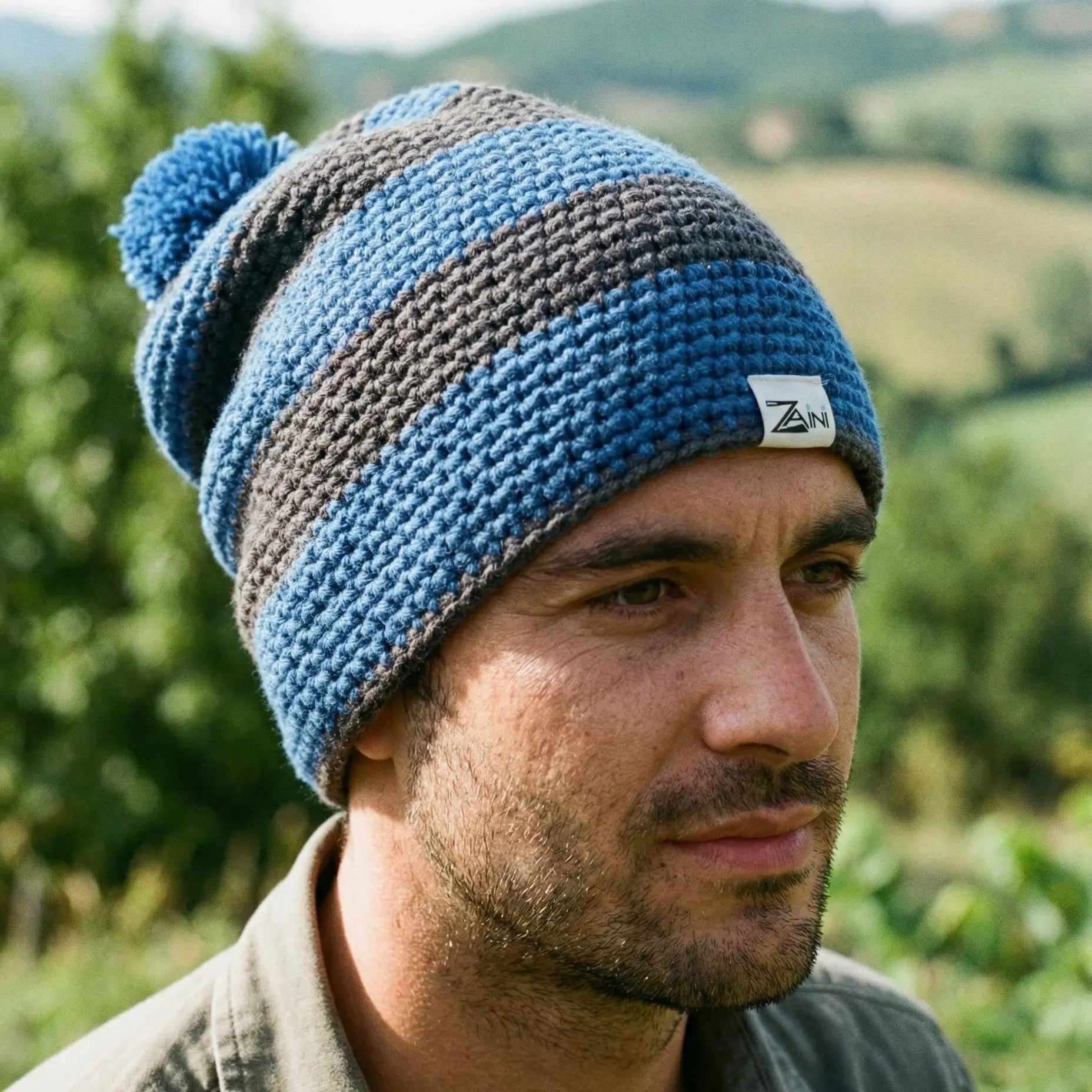
At Zaini, this evolution is central to what we do. Our handmade hats focus not only on style but also on comfort and wearability.
One common frustration with traditional wool hats is itchiness. Wool can irritate sensitive skin and scalps, which is why we use soft acrylic yarn instead. This ensures our hats are warm, soft, and comfortable to wear all day.
Today, beanies are no longer limited to specific groups. They are worn by everyone, from grandparents to children, travellers, skiers, hikers, and everyday style lovers.
They are also no longer just winter items. Thanks to lighter materials and modern designs, beanies have become a year-round fashion accessory.
A Long Road
From rough wool caps worn for survival to bright, colourful, and expressive accessories, the beanie has had an incredible journey.
It has moved through centuries of history, fashion, and culture, constantly evolving while staying relevant.
The question now is, what comes next?
At Zaini, we believe the future is bright, colourful, and full of personality. The beanie has been with us since at least the 12th century, and it is still going strong today.
That is over 800 years of evolution, and hopefully, many more to come.
Check out Zaini’s awesome range of Beanie caps here, and come join the Zaini Revolution!